Line-Following Robot Platform
Four generations of one robot, from a hand-tuned PID bot to a research platform with an identified plant model
The robot I keep coming back to. Each generation fixed what the last one taught me: a custom STM32 board milled in-house, a separate sensor-array and body PCB, then a research platform for my B.Sc. project where I identified the robot's dynamics from real telemetry and tuned the PID controller in MATLAB before deploying it.
- Role
- Designer: PCB, firmware, control
- Source code
- LFR system identification and PIDSystem identification, PID tuning code and the full reportgithub.com/simulahmed003/System-Identification-and-PID-Control-Implementation-on-LFRLine follower v2 designv2: PCB design, code and build guidesgithub.com/simulahmed003/Line-Follower-Design-v2.0Line follower v1v1: STM32 robot, PCB design files and photosgithub.com/simulahmed003/Line-Follower
- 4
- generations
- 56.1%
- model fit, 2nd-order discrete TF
- <5%
- overshoot on hardware
Version history
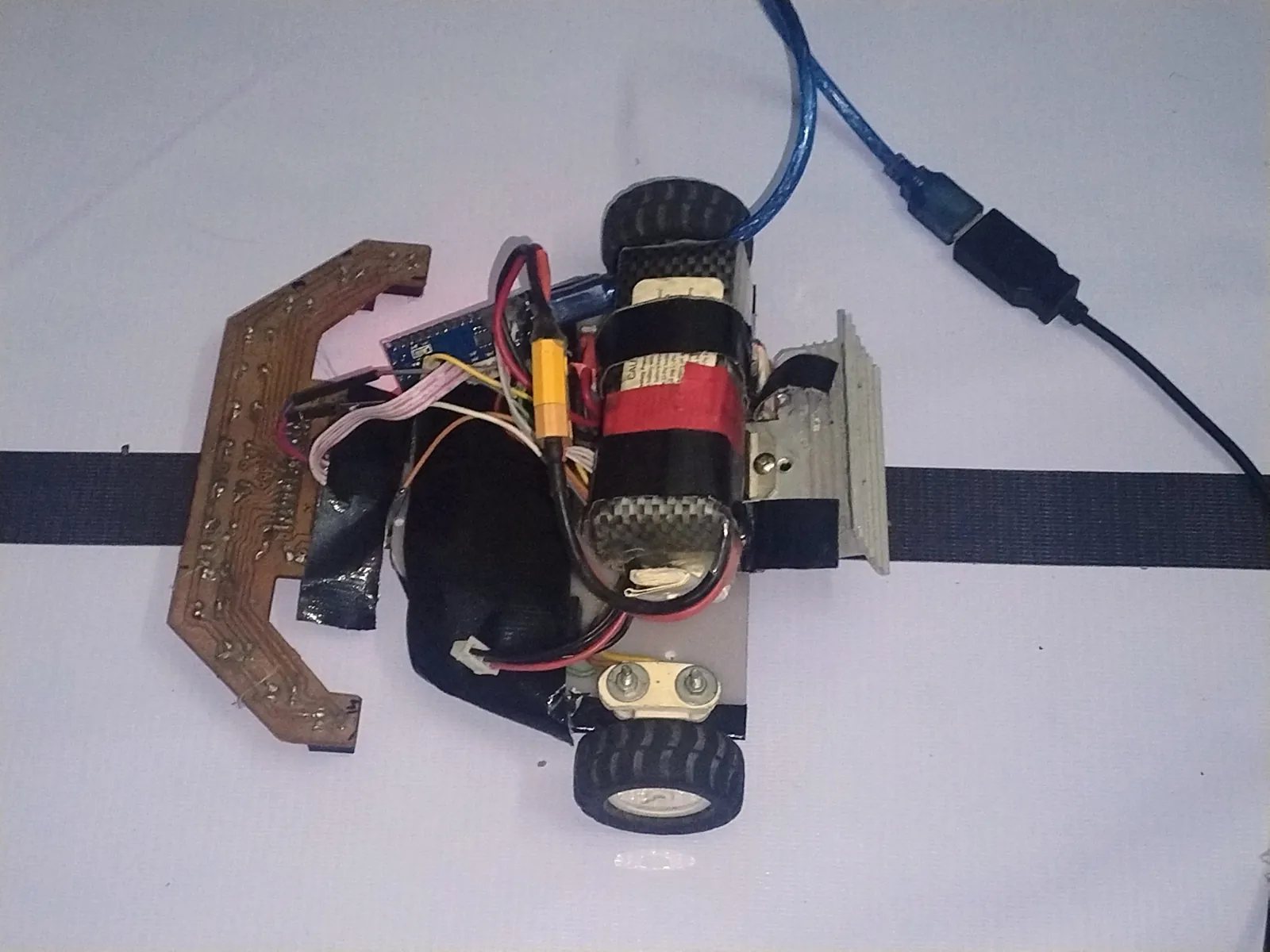
System-identification research platform
Apr 2026
B.Sc. engineering project (supervisor: Mostafizur Rahaman). I logged real telemetry over Bluetooth, identified a second-order discrete-time transfer function of the robot, tuned the PID controller in MATLAB against that model, and validated it on hardware.
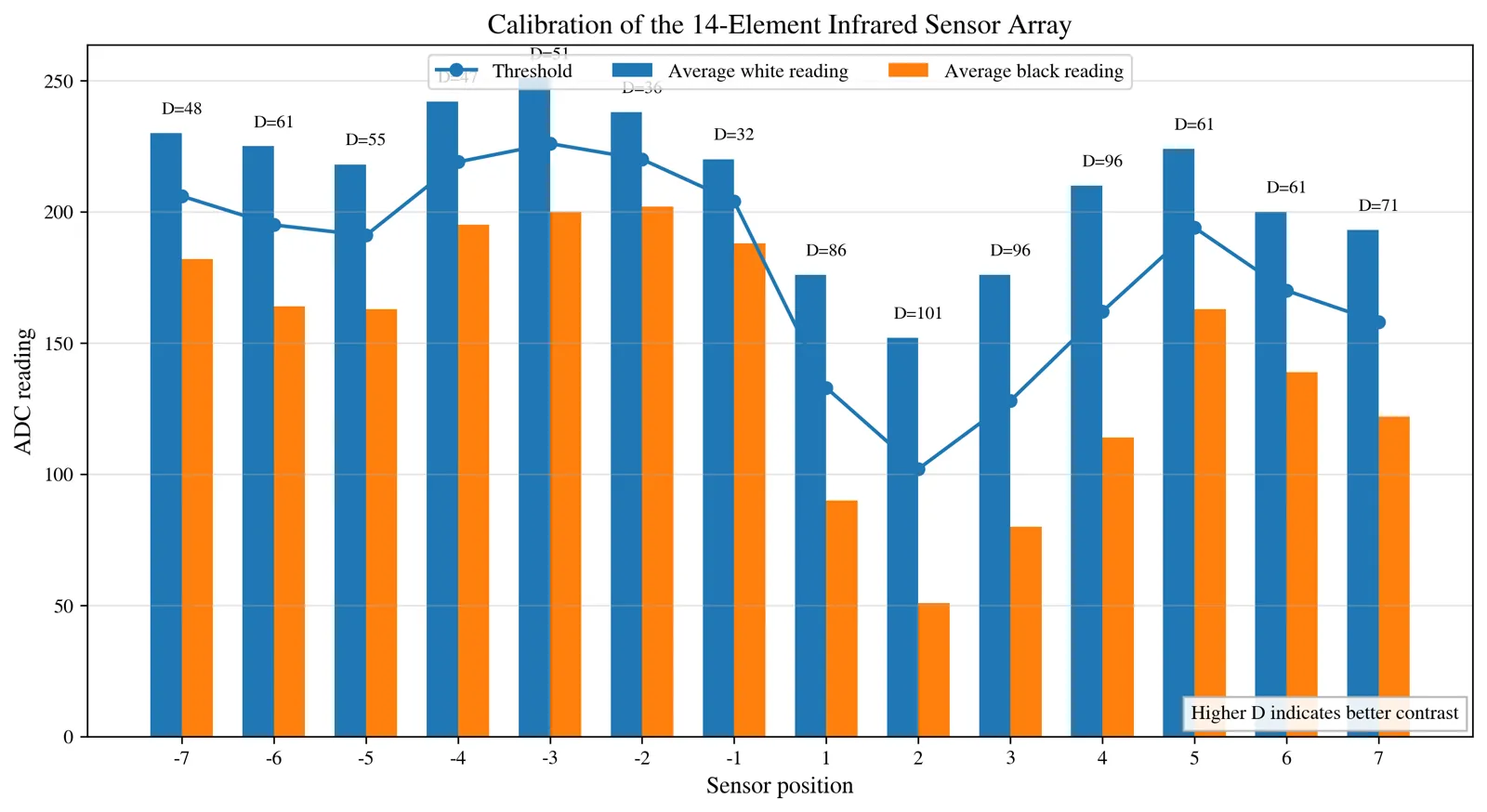
- Calibrated a 14-element TCRT5000 array and built a normalised tracking-error signal
- Identified a 2nd-order discrete-time plant model (56.1% fit, RMSE 9.77)
- Model-based PID worked on the first hardware deployment
- Settling ~8.8 s in simulation vs ~11 s on hardware; gap traced to motor dead-zone, saturation and sensor quantisation
- MCU
- Arduino Nano (ATmega328P)
- Sensors
- 14× TCRT5000
- Telemetry
- HC-05 Bluetooth
- Tools
- MATLAB System ID, PID Tuner, Simulink
Next project
Cirqoid CNC PCB Mill: Restoration and New Controller